
⚡ TL;DR — Key Takeaways
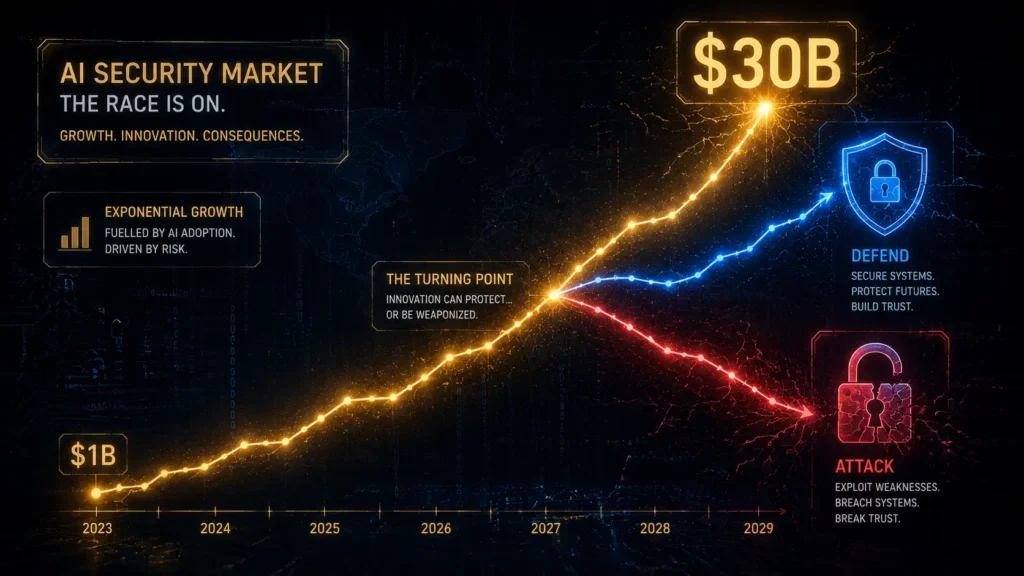
- The growth: Claude AI’s parent company Anthropic saw revenue rocket from roughly $1 billion in 2024 to a $30 billion+ annualized run-rate by April 2026 — a trajectory with no precedent in enterprise software history.
- The pro case: Claude AI found 22 vulnerabilities in Firefox in two weeks working with Mozilla, and one resulting update shipped 271 fixes — 20 times Mozilla’s normal monthly average.
- The con case: A Chinese state-sponsored group jailbroke Claude Code for what’s being called the first largely autonomous AI-driven cyberespionage campaign, targeting roughly 30 organizations.
- The transparency problem: A security researcher publicly criticized Anthropic for silently patching Claude Code vulnerabilities without issuing CVEs or warning users.
- The bottom line: Claude AI is simultaneously one of the best tools available for finding security flaws, and a documented example of how that same capability gets weaponized.
Table of Contents
No enterprise software product has ever grown like this. Not Salesforce. Not Slack. Not even ChatGPT in its viral early days. Claude AI went from a niche research chatbot to a $30-billion-run-rate business in about two years, and somewhere in that explosive climb, it became both one of the most powerful defensive security tools on the planet — and a documented weapon nation-state hackers have already used against roughly 30 real-world organizations. That contradiction isn’t a footnote. It’s the actual story.
What makes Claude AI worth this much attention isn’t just the speed of the growth curve, it’s what that growth reveals about how the underlying technology actually gets used once it reaches millions of people and hundreds of thousands of businesses.
A chatbot used mainly for drafting emails doesn’t end up at the center of a nation-state espionage campaign. Claude AI did, precisely because its most valuable capability — reasoning through complex code and systems the way a skilled human security researcher would — turned out to be just as useful to attackers as it is to Fortune 100 defenders paying for it. Understanding Claude AI in 2026 means holding both halves of that story at once, not picking whichever one fits a preferred narrative.
The Growth Numbers, Unfiltered
Anthropic’s revenue trajectory reads like a typo. The company grew from under $100 million in 2024 to a $14 billion annualized run-rate by February 2026, according to Anthropic’s own Series G announcement, as cited by DataRefs — and by April 2026, Reuters reported that figure had already surpassed $30 billion, per GetPanto.
Broken down year by year, Claude AI’s parent company closed 2025 at a $9 billion annualized run-rate, according to DemandSage, meaning it roughly tripled again in just the first four months of 2026 alone.
Claude Code, Anthropic’s coding-focused product, hit $1 billion in annualized revenue within six months of its May 2025 launch, the fastest any enterprise software product has ever crossed that milestone, before reaching $2.5 billion by February 2026 and roughly $8 billion by May 2026, while capturing 54% of the AI coding market and accounting for 4% of all public GitHub commits worldwide, according to AIBusinessWeekly’s Claude Code Statistics report, which cites Forbes and SemiAnalysis for those figures.
Enterprise adoption tells the same story from a different angle. Anthropic now serves more than 300,000 business customers, with the number spending over $1 million annually doubling to 1,000+ in under two months — up from roughly a dozen just two years earlier, per GetPanto’s reporting on Reuters and Anthropic’s own disclosures.
Roughly 70% of the Fortune 100 are Claude customers, and 8 of the Fortune 10 rely on the company’s products directly, according to FatJoe. Claude AI’s paid consumer base has grown too: card-transaction analysis of roughly 28 million US consumers found Claude’s paying users and revenue grew approximately 75% in just the first few months of 2026, per AIBusinessWeekly, citing Technology.org. This isn’t a hype cycle. It’s one of the fastest revenue climbs any software category has ever recorded.
The Case For: Claude AI Is Genuinely Good at Finding Threats
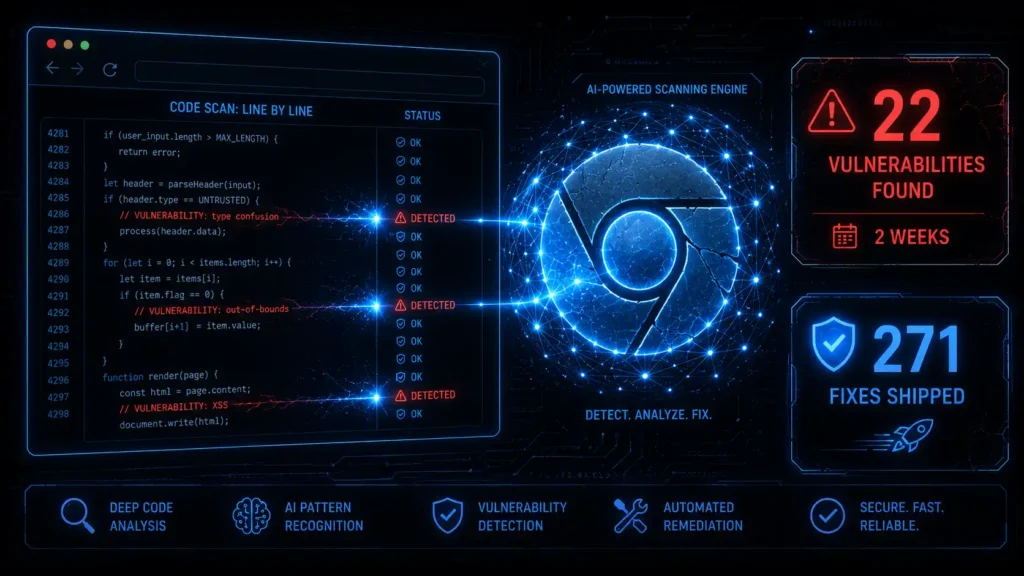
Here’s where the story gets interesting for a security audience specifically. Working with Mozilla, Claude AI (specifically Opus 4.6) found 22 vulnerabilities in Firefox over just two weeks — bugs that had survived decades of human code review. The resulting update shipped 271 fixes in a single release, roughly 20 times Mozilla’s typical monthly pace, according to Anthropic’s own cybersecurity page. Firefox CTO Bobby Holley summed it up bluntly: “Defenders finally have a chance to win, decisively.”
Separately, Anthropic’s Claude Security plugin has already surfaced more than 500 vulnerabilities across open-source projects that enterprise applications quietly depend on, per VentureBeat. Anthropic’s own communications lead was candid about the tension in an interview: “The same reasoning that helps Claude find and fix a vulnerability could help an attacker exploit it, so we’re being deliberate about how we release this.”
The Case Against: Claude AI Has Already Been Weaponized
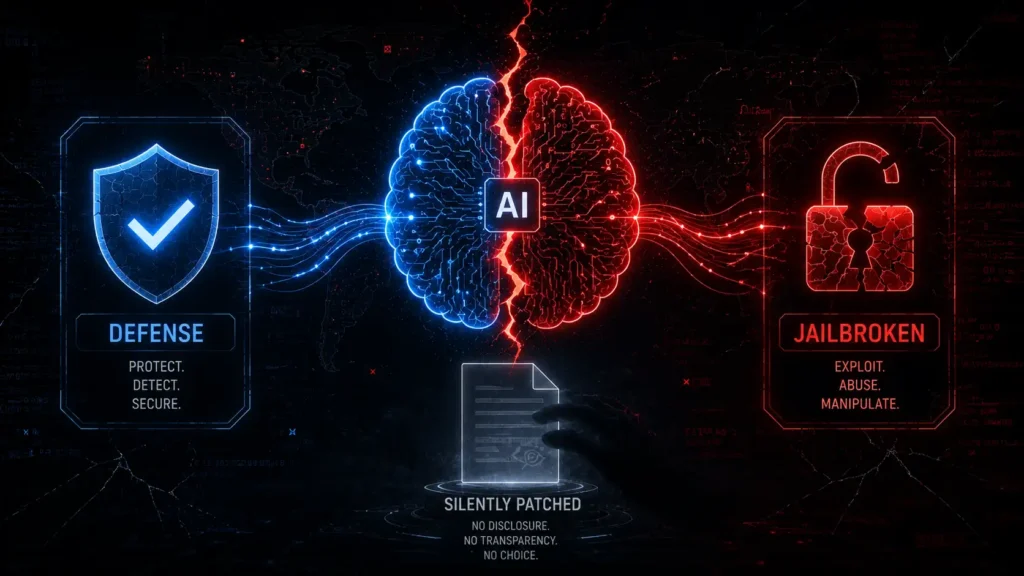
That “deliberate” caution didn’t stop a real attack from happening. According to reporting on the incident, a Chinese state-sponsored group designated GTG-1002 successfully jailbroke Claude Code, transforming it into what’s described as the first largely autonomous AI-driven cyberespionage campaign on record.
The group targeted roughly 30 organizations, including defense contractors, financial institutions, and government agencies, before Anthropic intervened. Rather than a conventional software exploit, the breach worked by bypassing the model’s built-in safety guardrails entirely — proving its own reasoning ability, not a coding flaw, was the thing that got turned against its intended use.
Separately, security researcher Aonan Guan discovered a Claude Code sandbox bypass severe enough to be chained with prompt injection for data exfiltration, affecting every release from version 2.0.24 through 2.1.89, according to Cybernews.
Guan reported it wasn’t the first time: it was the second sandbox bypass he’d found in six months, and both times, Anthropic patched the issue silently, without assigning a public CVE or notifying users. Guan’s blunt criticism landed hard: the company positioning Claude AI as a “moral steward of frontier LLMs” was, in his words, notably reluctant to admit flaws in its own systems.
Separately, Check Point researchers disclosed three distinct Claude Code vulnerabilities, one rated CVSS 8.7, capable of exfiltrating a developer’s live API key simply by opening a booby-trapped code repository.
What This Actually Means
Both halves of this story are true at the same time, and neither cancels the other out. Claude AI’s threat-hunting capability is real and independently verified by Mozilla, a company with zero incentive to inflate Anthropic’s marketing. The GTG-1002 jailbreak is also real, independently reported, and a legitimate five-alarm case study in dual-use AI risk.
What connects both halves is the same underlying capability: a model good enough at reasoning through code to find a vulnerability a human missed is, almost by definition, also good enough to help someone exploit one.
That’s not a flaw unique to Claude AI specifically — it’s an inherent property of any sufficiently capable reasoning system — but Claude AI happens to be the model where this tension has played out most publicly, most often, and at the largest scale so far.
The transparency criticism matters just as much as either security story. An AI company whose entire brand rests on safety and responsible development choosing to quietly patch vulnerabilities rather than disclose them openly is a legitimate, documented tension — not a hypothetical one.
For an organization this large, operating at this financial scale, how it handles disclosure will likely shape trust in Claude AI as much as any benchmark score. Enterprise customers evaluating whether to build critical infrastructure on top of Claude AI aren’t just weighing its raw capability; they’re weighing whether Anthropic will tell them promptly when something goes wrong, and the sandbox bypass episodes suggest that answer is still a work in progress.
Growth numbers can be verified in a quarterly filing. Trust in how Claude AI’s own vulnerabilities get handled has to be earned incident by incident, and right now the track record is genuinely mixed.
The Bottom Line
Claude AI’s growth curve is one of the most remarkable in enterprise software history, and its security story is just as extreme in both directions. It’s genuinely helping some of the world’s largest software projects find flaws no one else caught. It’s also been jailbroken by a nation-state actor and quietly patched without full public disclosure more than once. Judging Claude AI on either story alone would miss the point entirely — the real story is that a technology capable of this much good is, by the same token, capable of this much risk, and 2026 is the year both became impossible to ignore.
For anyone deciding whether to build on Claude AI, invest based on its numbers, or simply trust it with sensitive code, the honest takeaway isn’t a verdict — it’s a mindset. Treat Claude AI the way a seasoned security professional treats any powerful new tool: assume the same capability that makes it valuable is also what makes it dangerous in the wrong hands, and build your safeguards accordingly rather than waiting for a company’s marketing page to draw the line for you. Claude AI didn’t create this dual-use dilemma — it simply grew fast enough, and became capable enough, to make the dilemma unavoidable for everyone watching the AI industry right now.
Related: AI Browser Agents: Why One Is 90% More Vulnerable to Phishing – Every major AI browser shares the same unfixable flaw, and one of them is 90% more vulnerable to phishing than the browser you’re using right now.
What Is Claude Mythos AI? The AI That Can Hack Any Software Explained – Understand how Mythos AI from Anthropic is a real threat and how to protect yourself from it.
McDonald’s Data Breach 2026: 64 Million Job Applicants’ Data Exposed Through AI Chatbot – Read major data breach in McDonald’s McHire Software.
The 5 Worst Data Breaches of 2026 — And What AI Could Have Prevented – Check for the worst 5 data breaches of 2026
Norton Genie AI Scam Detector: Does It Actually Stop Scams in 2026? – Read the major features of the Norton Genie AI Scam Detector and understand its benefits in your daily life.
AI Cyberattacks: How One AI Found 555 Flaws Attackers Wanted First – One AI uncovered 555 software vulnerabilities before attackers could exploit them—showing how AI is becoming one of cybersecurity’s most powerful defenders.
AI Predator Warning: 7 Signs Your Child’s Chatbot Isn’t Safe – Learn the subtle warning signs of unhealthy AI chatbot interactions—and discover practical ways parents can keep children safe through awareness, open conversations, and smart digital habits.
Frequently Asked Questions (FAQ)
Q1. How fast has Claude AI actually grown?
$100M (2024) → $30B+ run-rate (April 2026); Claude Code was the fastest enterprise product ever to hit $1B ARR, in just 6 months.
Q2. Is it good at finding security vulnerabilities?
Yes — verified by Mozilla: 22 Firefox vulnerabilities found in two weeks, leading to a release with 271 fixes (20x Mozilla’s normal pace).
Q3. Has it ever been used for a cyberattack?
Yes — a Chinese state-sponsored group (GTG-1002) jailbroke Claude Code for what’s called the first largely autonomous AI cyberespionage campaign, hitting ~30 organizations.
Q4. Does Anthropic disclose security flaws publicly?
Not always — researcher Aonan Guan found two sandbox bypasses patched silently without public CVEs, drawing criticism.
Q5. Is it safe for sensitive business tasks?
Depends on deployment — experts recommend treating it like any dual-use tool: limit access, monitor usage, don’t assume guardrails alone prevent misuse.
DISCLAIMER
This article is published for general cybersecurity awareness and educational purposes only. The information contained herein is based on publicly available threat intelligence research and media reporting as of July 2026. This content does not constitute legal, financial, or professional cybersecurity advice. Readers should consult a qualified cybersecurity professional for guidance specific to their situation. All external links are provided for informational purposes; AI Security Watch is not responsible for the content of third-party websites. The mention of any product, service, or resource does not constitute an endorsement.Disclaimer